
Globe coverage
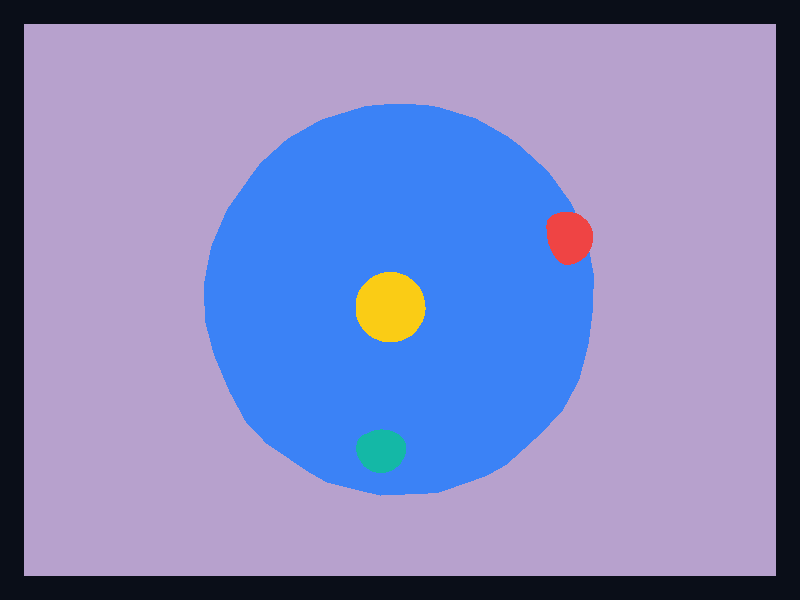
A marker can show where a service operates. It does not, on its own, show how far that service reaches. This distinction is particularly important for a coverage screen: a point identifying a regional office is not evidence that the surrounding country is served.
Use a globe when the reader needs global orientation. If they need to determine whether a particular address is covered, provide an address lookup backed by the actual coverage data instead.
Model what the marker means
Keep operational state separate from geographic position. A planned location and an active location may share the same coordinates, but they must not become indistinguishable simply because both have a marker.
The following component shows active locations. It reuses ServiceLocationsGlobe from Globe, placed in widgets/service_globe.rs. Positions should already have been validated and converted using that page's coordinate convention.
use fission::prelude::*;
use fission::core::op::Color;
use fission::three_d::Point3D;
use crate::widgets::service_globe::ServiceLocationsGlobe;

#[derive(Clone)]
pub struct CoverageSite {
    pub position: Point3D,
    pub active: bool,
}

fission_component! {
    pub ActiveCoverage<()> {
        props {
            title: TextContent,
            sites: Vec<CoverageSite>,
            globe_color: Color,
            marker_color: Color,
        }
    }
    view(coverage, _state, _cx) {
        let locations = coverage.sites.iter()
            .filter(|site| site.active)
            .map(|site| site.position.clone())
            .collect();
    } => ServiceLocationsGlobe {
        title: coverage.title.clone(),
        locations: locations,
        globe_color: coverage.globe_color,
        marker_color: coverage.marker_color,
    }
}
The parent owns location names, operational status and any coordinate-validation failures. Keep that information available in a labelled list next to the globe; filtering the geometry must not discard the underlying records or their status.
Rendering and interaction
This gallery uses fission::three_d::Scene3D with sphere primitives. Enable the three-d feature. Its optional width and height fields size the viewport; it has no camera, ambient_light or geographic coverage fields.
There is no per-location ChartInteractionEvent in this scene API. Selecting a location in the accompanying list can use ordinary Compose reducers. If clicking the point itself is a requirement, use a scene interface with an explicit picking contract rather than assuming that chart interaction settings apply.
Check the result
Test that inactive sites are excluded and active sites retain their positions. Also check the hidden hemisphere: a correct point can be behind the globe and therefore absent from the current view. The accessible location list must still contain it.
The screenshot is a gallery fixture. It demonstrates the spherical presentation, not a claim about the extent or availability of a real service.
Tags: 3d, globe.
Previous
Globe
Next
Globe markers