
Small multiple bars A
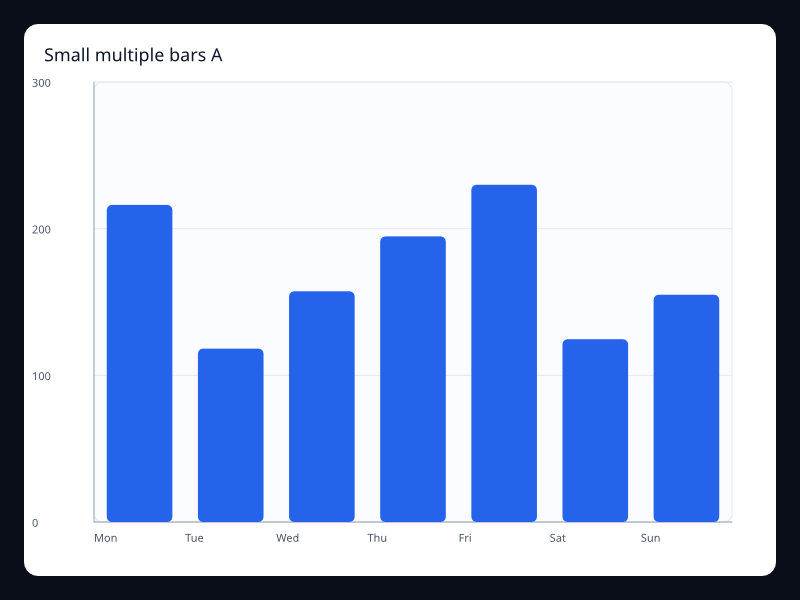
Small multiples separate several branches into comparable panels. The separation reduces overlapping marks, but only if every panel keeps the same periods, scale and counting rule.
This page defines the reusable panel. The second example places two independent instances together.
Compose panel
use fission::prelude::*;
use fission::charts::{Axis, BarSeries, Chart, Series};

fission_component! {
    pub WeeklyBranchOrders<()> {
        props {
            chart_id: WidgetId,
            title: String,
            measure_label: String,
            periods: Vec<String>,
            counts: Vec<u32>,
            shared_max: f32,
        }
    }
    view(panel, _state, _cx) {
        let labels = panel.periods.iter().map(String::as_str).collect();
        let values = panel.counts.iter().map(|count| *count as f32).collect();
    } => Chart(
        id: Some(panel.chart_id),
        title: Some(panel.title.clone()),
        x_axis: Some(Axis::category(labels)),
        y_axis: Some(Axis::value().min(0.0).max(panel.shared_max)),
        series: vec![Series::Bar(
            BarSeries::new(&panel.measure_label).data(values),
        )],
    )
}
Put this component in widgets/weekly_branch_orders.rs. The parent supplies translated labels, a ready snapshot and a chart ID derived from the branch's durable identity. Each panel constructs its own chart; it does not clone a retained widget into multiple positions.
Choose the scale once
Validate that labels and counts have equal lengths, and calculate a finite positive shared_max covering every panel. If each chart auto-scales independently, a branch with ten orders can appear as busy as one with a thousand.
Test different distributions on the same scale and inspect panel widths at mobile and desktop sizes. Expose exact counts in a corresponding report list. The screenshot is one gallery fixture, not a complete small-multiples layout.
Previous
SLA breach delta