
Word cloud
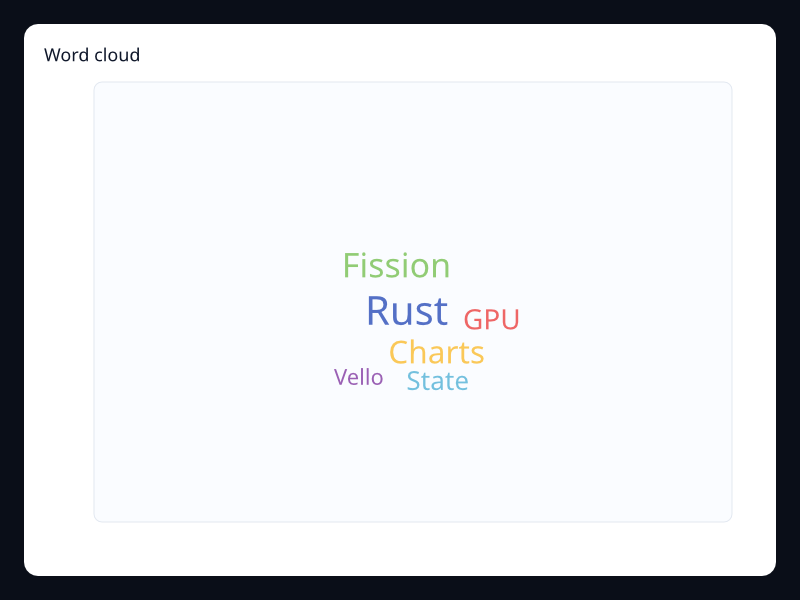
A word cloud can draw attention to frequently mentioned terms, but it does not explain sentiment or the reason a term appeared. The word slow may occur in praise of a deliberate workflow as well as a performance complaint.
Aggregate and review terms before rendering. The chart is not a natural-language analysis pipeline.
use fission::prelude::*;
use fission::charts::{Chart, Series, WordcloudSeries};

#[derive(Clone)]
pub struct FeedbackTerm {
    pub term: String,
    pub mentions: u32,
}

fission_component! {
    pub FeedbackTermsCloud<()> {
        props {
            title: String,
            mentions_label: String,
            terms: Vec<FeedbackTerm>,
        }
    }
    view(feedback, _state, _cx) {
        let largest = feedback.terms.iter().map(|term| term.mentions)
            .max().unwrap_or(0).max(1) as f32;
        let weights = feedback.terms.iter().map(|term| (
            term.term.as_str(), term.mentions as f32 / largest * 100.0,
        )).collect();
    } => Chart(
        title: Some(feedback.title.clone()),
        series: vec![Series::Wordcloud(
            WordcloudSeries::new(&feedback.mentions_label).data(weights),
        )],
    )
}
The parent supplies translated report labels and already-approved term content. The source terms are data, not translation keys. Keep language-specific aggregation separate instead of merging unrelated inflections or meanings solely to simplify display.
The projection normalises display weights to 0–100 because the current layout derives font size from that range. Keep original mention counts authoritative and show them in a ranked list. The layout uses approximate text bounds, not a guarantee that every term fits within the plot.
Test long terms, ties, an empty report and a bounded representative set. Use bars or the list when exact comparisons matter. The screenshot is a gallery fixture.
Previous
Visual map
Next
Dataset