
Platform readiness radar
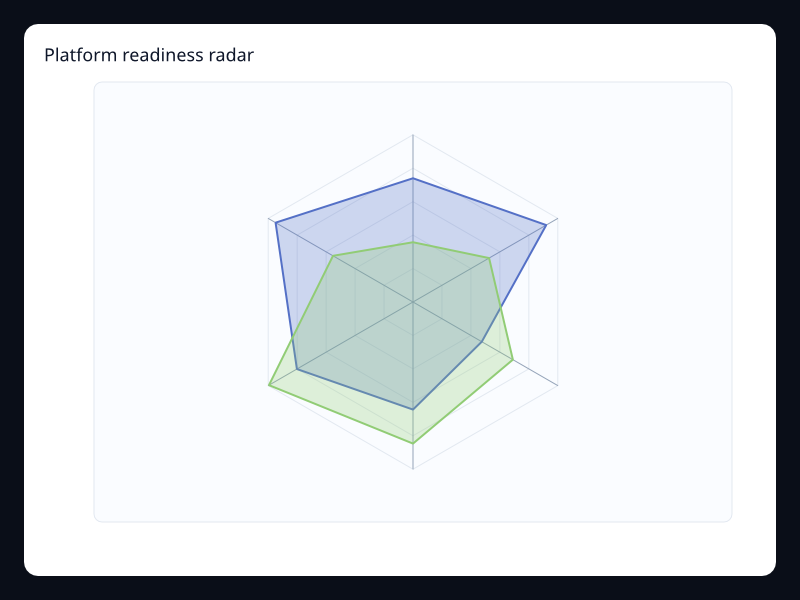
Platform readiness involves several independent prerequisites. Packaging, accessibility, storage and navigation may each be at a different stage, and a single average can hide a release blocker. The screenshot is from Fission's chart gallery.
What the chart is for
A radar can summarise four explicitly defined readiness scores. Keep higher values consistently meaning more of the required work is verified. The shape is not permission to ship with a failed mandatory requirement.
Data model
RadarSeries maps each value onto a fixed 0–100 radius. It does not calculate scores, draw named spokes or attach evidence to a score. Keep a fixed dimension order and the assessment evidence in the release model.
Authoring from a Fission component
The parent supplies four validated scores and a localized explanation naming them in order.
use fission::prelude::*;
use fission::charts::{Chart, RadarSeries};

// The parent resolves display labels from its translation bundles.
fission_component! {
    pub PlatformReleaseReadiness<()> {
        props {
            chart_title: String,
            series_label: String,
            scores: [f32; 4],
            dimension_description: TextContent,
        }
    }
    view(report, _state, _cx) => Column(children: [
        Text(report.dimension_description.clone()),
        Chart(
            title: Some(report.chart_title.clone()),
            series: vec![RadarSeries::new(&report.series_label)
                .data(vec![report.scores.to_vec()])
                .into()],
        ),
    ])
}
Testing and accessibility
Test a missing assessment and a blocking failure despite otherwise high scores. Provide named values and unresolved requirements outside the radar, and never infer an overall readiness grade from polygon area.
Tags: radar, platform.
Previous
Plan share pie