
Dynamic alert scatter
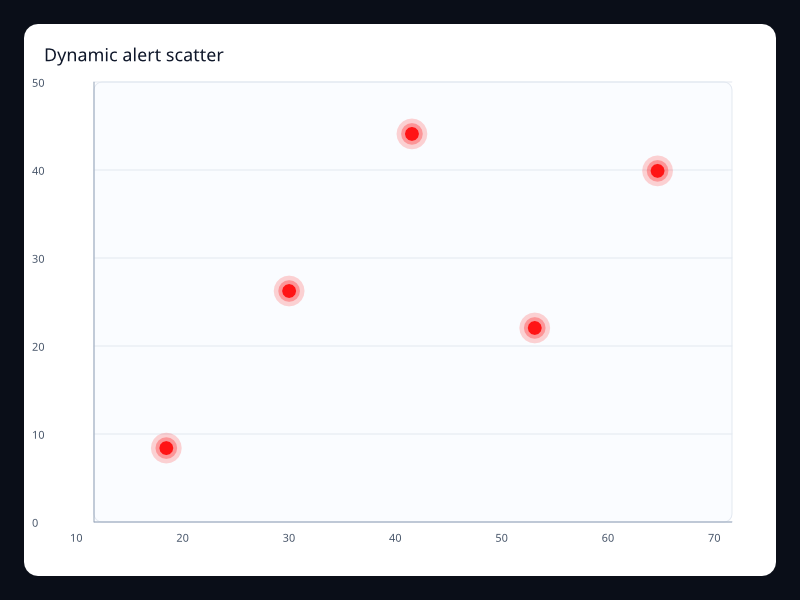
An alert must be established by application rules before a chart highlights it. The chart should not infer an incident merely because a point looks distant from the others.
EffectScatterSeries names a visual series. It is unrelated to asynchronous effect syntax and does not fetch alerts, dispatch notifications or evaluate thresholds.
use fission::prelude::*;
use fission::core::op::Color;
use fission::charts::{Axis, Chart, EffectScatterSeries, Series};

fission_component! {
    pub ActiveServiceAlerts<()> {
        props {
            chart_id: WidgetId,
            title: String,
            alerts_label: String,
            payload_label: String,
            latency_label: String,
            alert_points: Vec<(f32, f32)>,
            alert_colour: Color,
        }
    }
    view(alerts, _state, _cx) {
        let mut series = EffectScatterSeries::new(&alerts.alerts_label)
            .data(alerts.alert_points.clone());
        series.color = Some(alerts.alert_colour);
    } => Chart(
        id: Some(alerts.chart_id),
        title: Some(alerts.title.clone()),
        x_axis: Some(Axis::value().name(alerts.payload_label.clone())),
        y_axis: Some(Axis::value().name(alerts.latency_label.clone())),
        series: vec![Series::EffectScatter(series)],
    )
}
The public series exposes its colour field but no colour builder, so setup assigns it directly. Supply a design-system colour, translated labels and finite coordinates in declared units.
The renderer draws concentric emphasis rings. That alone is not evidence of continuous pulsing or a live update source. Refresh alert state through effects and reducers, then pass the latest valid snapshot.
Keep alert IDs, severity and explanations in an accessible list. Test no active alerts, stale data and a failed refresh as distinct states. The image uses gallery data.
Previous
Dataset stacked area