
Risk score parallel
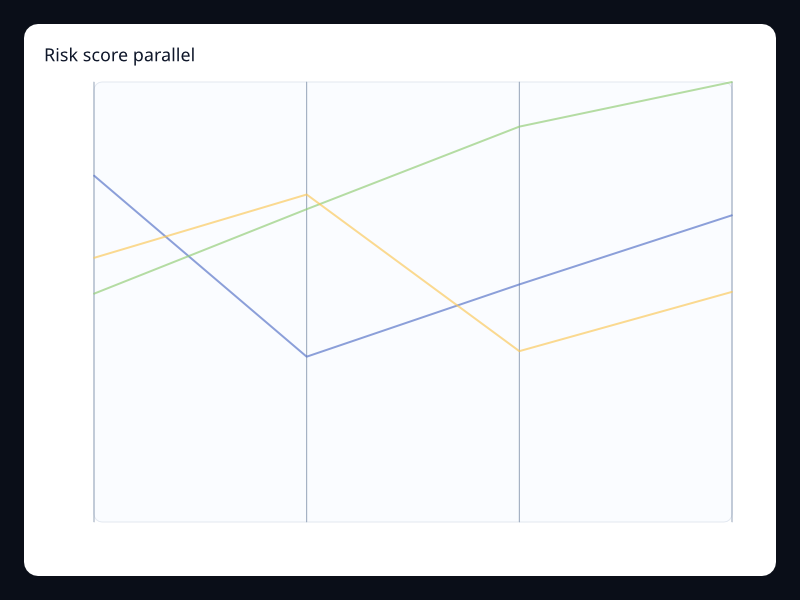
Risk dimensions are comparable only under a shared assessment policy. A supplier's likelihood, impact, detection difficulty and recovery exposure cannot be added as raw quantities simply because they are numbers. The screenshot is from Fission's chart gallery.
What the chart is for
Use four policy scores on 0–100, consistently higher meaning greater risk. Keep evidence, uncertainty and blocking findings outside the visual rather than treating the line as a calibrated probability.
Data model
ParallelSeries takes equal-length score rows and uses a fixed 0–100 scale. It does not label axes, name each observation or implement filtering. Preserve stable supplier IDs and dimension order in the report model.
Authoring from a Fission component
The parent calculates the scores and supplies a localized explanation naming each dimension.
use fission::prelude::*;
use fission::charts::{Chart, ParallelSeries};

// The parent resolves display labels from its translation bundles.
fission_component! {
    pub SupplierRiskParallel<()> {
        props {
            chart_title: String,
            series_label: String,
            scores: Vec<[f32; 4]>,
            dimension_description: TextContent,
        }
    }
    view(report, _state, _cx) {
        let rows = report.scores.iter().map(|row| row.to_vec()).collect();
    } => Column(children: [
        Text(report.dimension_description.clone()),
        Chart(
            title: Some(report.chart_title.clone()),
            series: vec![ParallelSeries::new(&report.series_label).data(rows).into()],
        ),
    ])
}
Testing and accessibility
Test unknown assessments and changes to the scoring rubric. Provide named values and evidence in an accessible table; do not turn missing evidence into an apparently low-risk zero.
Tags: parallel, risk.
Previous
Risk bubble matrix