
Quality dataset parallel
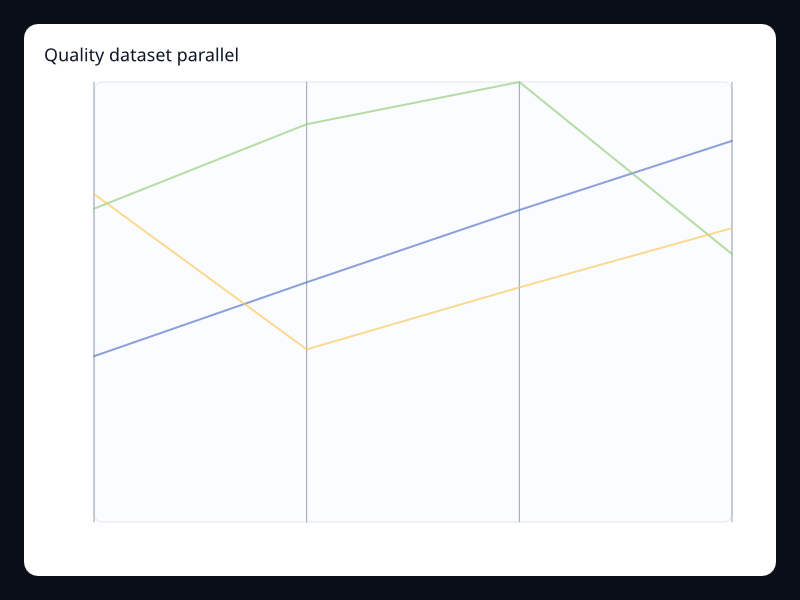
A quality profile compares several rates without combining them into an unexplained score. The dimensions need compatible scales and declared definitions.
The current parallel renderer expects 0–100 values. It has no per-dimension labels or row identities, so a surrounding key and table remain part of the report.
use fission::prelude::*;
use fission::charts::{Chart, ParallelSeries, Series};

#[derive(Clone)]
pub struct BatchQuality {
    pub batch_id: String,
    pub first_pass_percent: f32,
    pub retest_pass_percent: f32,
    pub on_time_percent: f32,
}

fission_component! {
    pub BatchQualityProfiles<()> {
        props {
            title: String,
            batches_label: String,
            dimension_key: TextContent,
            batches: Vec<BatchQuality>,
        }
    }
    view(quality, _state, _cx) {
        let rows = quality.batches.iter().map(|batch| vec![
            batch.first_pass_percent,
            batch.retest_pass_percent,
            batch.on_time_percent,
        ]).collect();
    } => Column(children: [
        Text(quality.dimension_key.clone()),
        Chart(
            title: Some(quality.title.clone()),
            series: vec![Series::Parallel(
                ParallelSeries::new(&quality.batches_label).data(rows),
            )],
        ),
    ])
}
Translate the title and key and name the dimension order explicitly. Keep batch IDs and rates in an adjacent table. This is a typed row-to-series projection, not arbitrary Dataset encoding.
Validate finite percentages and denominators, particularly when no units required a retest. An unavailable rate is not zero. Test row order and a small selected set before overlaying many batches. The gallery image is not a statistical quality assessment.
Previous
Products by year dataset
Next
Quarter timeline