
Tree
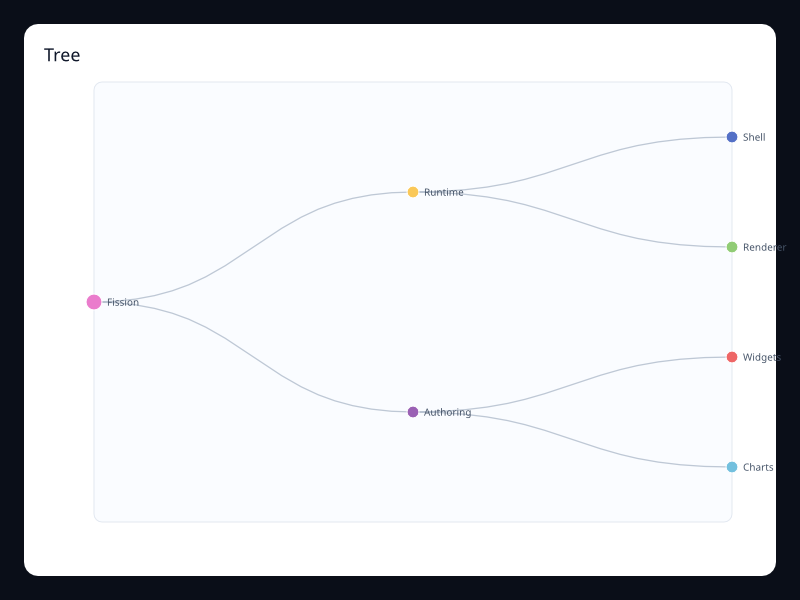
A tree records one parent/child structure. An organisation's ownership hierarchy fits that model when each unit has one parent; a network of shared responsibilities may require a graph instead. The screenshot is from Fission's chart gallery.
What the chart is for
Use a tree to explain reporting structure, not relative budget or headcount. If those quantities matter, present them separately rather than implying that a node's location measures them.
Data model
TreeSeries uses nested TreemapNode records. Each node has a required numeric value, despite older descriptions calling it optional. Equal placeholder weights are appropriate when no quantitative size is intended; labels should identify the units clearly.
Authoring from a Fission component
The parent supplies the prepared ownership hierarchy. The series lays it out but does not automatically add interactive disclosure or route navigation.
use fission::prelude::*;
use fission::charts::{Chart, TreeSeries, TreemapNode};

// The parent resolves display labels from its translation bundles.
fission_component! {
    pub OrganisationOwnershipTree<()> {
        props {
            chart_title: String,
            series_label: String,
            ownership_units: Vec<TreemapNode>,
        }
    }
    view(report, _state, _cx) => Chart(
        title: Some(report.chart_title.clone()),
        series: vec![TreeSeries::new(&report.series_label)
            .data(report.ownership_units.clone())
            .into()],
    )
}
Testing and accessibility
Test an isolated root, repeated display names and deeply nested units. Preserve durable domain IDs in the model and provide an accessible expandable list when navigation is required; the chart is a drawing of the hierarchy, not a TreeView control.
Tags: tree, hierarchy.
Previous
Theme river
Next
Treemap